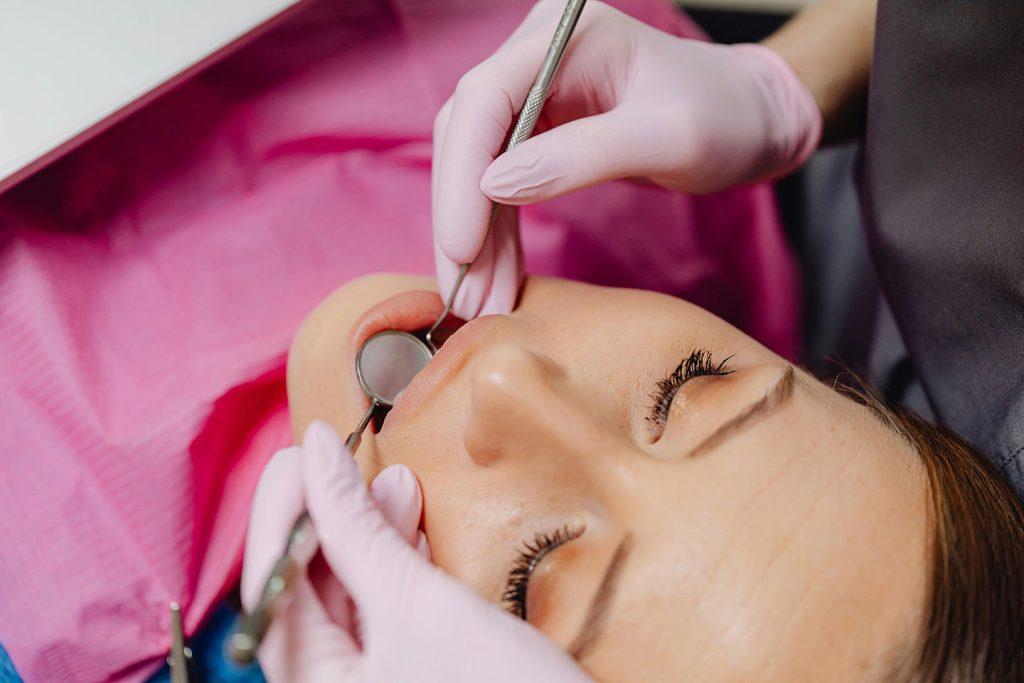
Most of us know that stress takes a toll on the body. It shows up in tight shoulders, restless nights, headaches that seem to come out of nowhere. What a lot of people don’t realize is that stress also has a pretty significant effect on your oral health, and not always in ways that are obvious.
We see it in our patients regularly. Life gets busy or overwhelming, and the mouth is often one of the first places it shows up. The connection makes sense when you think about it. Stress is a full-body experience, and your mouth is not somehow separate from everything else that’s happening.
Grinding and Clenching
One of the most common signs is grinding or clenching your teeth, usually during sleep. Many people have no idea they’re doing it until a partner mentions the noise, or they start waking up with a sore jaw and a dull headache that’s hard to explain. Stress is one of the primary triggers, and the tricky part is that it often happens when you’re completely unaware.
Over time, grinding puts real wear on your enamel. It can cause teeth to become sensitive, flatten the biting surfaces, and in some cases lead to cracks. If you’re waking up with jaw soreness or tension headaches, it’s worth mentioning at your next visit. A custom night guard can protect your teeth while you sleep, and it’s a pretty simple solution to something that can otherwise cause cumulative damage over months and years.
Canker Sores
Those small, tender sores that appear on the inside of your cheeks or lips are another common sign of stress. A lot of people assume canker sores are contagious or a sign of something serious, but they’re neither. They’re shallow ulcers that develop in the soft tissue of the mouth, and stress is one of the most well-known triggers, largely because of the way prolonged stress affects the immune system.
When your body is under sustained strain, the tissue inside your mouth can become more reactive and more vulnerable. Canker sores typically clear up on their own within a week or two, and there’s no specific treatment that makes them heal faster. Cold water can help with the discomfort, and avoiding acidic or spicy foods while they’re present makes things more comfortable. But if you’re getting them frequently, that pattern is worth discussing with us.
Gum Disease
This one tends to surprise people. There’s a well-established connection between chronic stress and gum disease, and it comes down to cortisol. When the body is under prolonged stress, cortisol levels stay elevated, and cortisol suppresses the immune response. That makes it harder for your body to fight off the bacteria that cause gum inflammation.
If your gums have felt more tender or bled more easily during a particularly stressful stretch, that’s not a coincidence and it doesn’t mean you’ve done anything wrong. It means your body is working hard and your mouth is feeling the effects. Staying on top of your cleaning schedule during stressful periods matters more than most people realize, because that’s exactly when your gums need a little extra support.
Dry Mouth
Stress affects the way your body functions in a lot of ways, including saliva production. Anxiety can reduce saliva flow on its own, and many medications prescribed for anxiety or depression list dry mouth as a side effect. Saliva does a lot of quiet, important work in your mouth. It neutralizes acids, rinses away food particles, helps remineralize enamel, and keeps bacterial levels in check. When there isn’t enough of it, your mouth becomes a more hospitable environment for the things that lead to cavities and irritation.
Drinking plenty of water throughout the day is the simplest thing you can do to help. If dry mouth is something you’re dealing with regularly, mention it at your next appointment and we can talk through some options.
The Habits That Slip
Beyond the physical effects, stress has a way of quietly dismantling routines. Brushing gets rushed. Flossing gets skipped. The appointment you meant to schedule gets pushed to next month, and then the month after that. We understand, and we’re genuinely not here to add to anyone’s load. But this is often exactly when your mouth could use a little extra attention, even if that just means slowing down for two minutes at night and drinking more water during the day.
What Helps
If you’re in a stressful season right now, sticking to your routine, even imperfectly, makes a real difference. The basics still work. Brush twice a day, floss when you can, stay hydrated, and try not to let your cleaning appointments slip too far. A lot of what stress triggers in the mouth is very manageable when we catch it early.
We know life gets complicated. Our job is to help you take care of your smile no matter what’s going on around you. If you have questions or it’s been a while since your last visit, give us a call. We are always glad to hear from you.