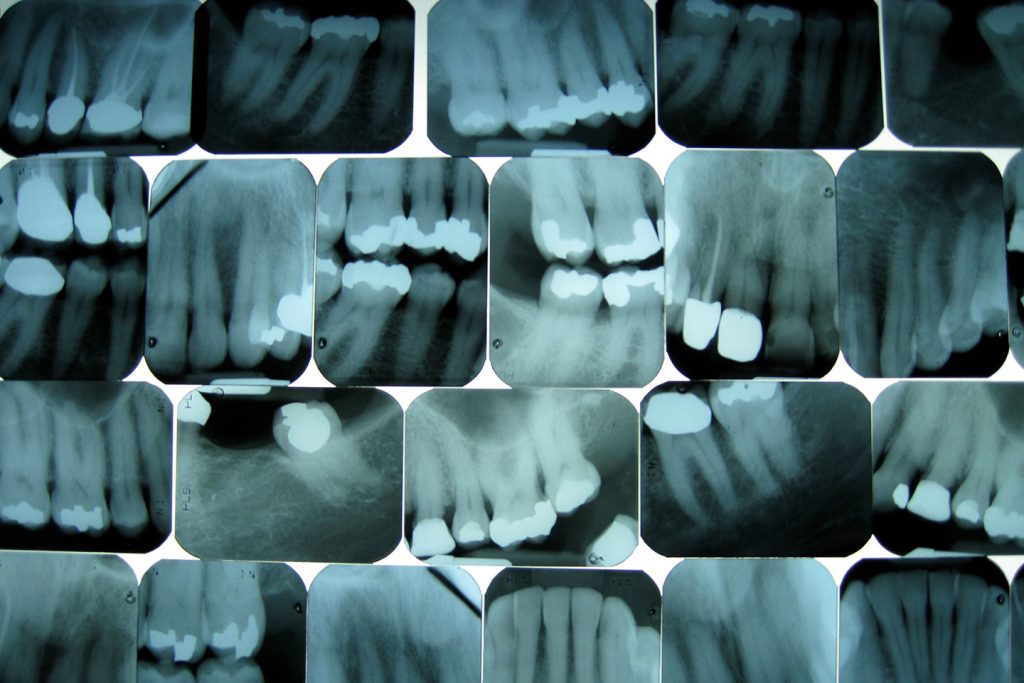
If you’ve ever sat in a dental chair with a small plastic sensor tucked against your cheek and wondered what exactly we’re looking at when those images come up on the screen, this one’s for you. X-rays are one of those things that feel routine because they are routine, but the information they give us is anything but ordinary.
Here’s a look at what dental X-rays actually show, why we take them when we do, and what we’d be missing without them.
The Limits of What We Can See
A visual exam is an important part of every dental appointment. We’re trained to notice a lot with our eyes, and we take that part of the visit seriously. But there are real limits to what any amount of training and experience can reveal through direct observation alone.
We can see the surfaces of your teeth that are exposed, the tissue of your gums, and the general landscape of your mouth. What we cannot see is what’s happening between your teeth, beneath your gumline, inside the tooth structure itself, or in the bone below. And that is precisely where some of the most important things to catch early tend to develop quietly.
What X-Rays Show Us
Cavities are one of the most straightforward examples. Decay that starts between teeth, in the areas where two teeth touch, is completely invisible to the naked eye until it has progressed significantly. By the time it’s visible on the surface, it’s often already become a more involved problem than it needed to be. X-rays let us catch that decay when it’s small, when the fix is simple, and when we can protect more of the natural tooth.
Beyond decay, X-rays show us the bone levels around your teeth. This is how we monitor for gum disease over time. Bone loss is one of the defining features of advanced gum disease, and it doesn’t announce itself with obvious symptoms early on. Comparing current X-rays to previous ones lets us see whether bone levels have remained stable or whether something has shifted that we need to address.
We can also see infections, cysts, and abscesses that have no visible signs from the outside. We can check the status of tooth roots, evaluate areas where a tooth has been treated in the past, and look at how wisdom teeth are positioned and whether they’re causing or likely to cause problems down the road.
The Radiation Question
We hear this concern regularly and we’re glad when patients bring it up, because it gives us a chance to put things in perspective. The amount of radiation involved in a standard set of dental X-rays is genuinely very low. A full set of bitewing X-rays delivers less radiation exposure than you’d get from a short airplane flight, or from spending a day outside in the sun. Modern digital X-ray technology has reduced exposure even further compared to older film-based systems.
We also don’t take X-rays at every appointment. The frequency depends on your individual situation: your history, your risk factors, and what we’ve been tracking over time. Some patients need them more often, some less. We follow the guidelines set by the American Dental Association and make the call based on what’s actually useful for your care.
Why Skipping Them Matters
We understand that some patients want to decline X-rays, sometimes because of cost, sometimes out of concern about radiation, and sometimes because everything feels fine and it seems unnecessary. We respect that patients have a say in their own care, and we’ll never push something that isn’t clinically indicated.
That said, we’d be doing a disservice if we didn’t explain what we’re working without. An exam without X-rays is a partial picture. A lot of what dental disease does in its early stages is develop silently, in places we simply cannot see any other way. Catching problems early is almost always better, in terms of treatment complexity, cost, and outcome, than catching them once they’ve had time to grow.
If you have questions about why we’re recommending X-rays at a particular visit, please ask. We’re always happy to walk you through our thinking. Understanding your care is part of getting good care, and that’s something we take seriously every time you come in.