What Fluoride Actually Does for Your Teeth
If you’ve ever had a fluoride treatment at the end of a cleaning and wondered whether it actually does anything, you’re not alone. It can feel like a small, easy-to-overlook step, especially when you’re already thinking about getting out the door. But fluoride is genuinely one of the more useful tools we have for keeping teeth healthy, and it’s worth understanding what it’s doing and why we recommend it.
How Teeth Lose and Regain Minerals
To understand fluoride, it helps to know a little bit about what’s happening on the surface of your teeth throughout the day.
Enamel, the outer layer of your teeth, is made up largely of minerals. Every time you eat or drink something, the bacteria in your mouth produce acids that pull minerals out of that enamel in a process called demineralization. Your saliva then works to restore those minerals in a process called remineralization. This back and forth is completely normal and happens constantly. The problems start when the balance tips too far in the wrong direction, when demineralization is happening faster than remineralization can keep up, and enamel starts to weaken.
Fluoride helps restore that balance. It incorporates into the enamel structure, making it more resistant to acid, and it actively supports remineralization. In the very earliest stages of decay, before a cavity has actually formed, fluoride can help reverse the damage. That’s not a small thing.
Fluoride in Toothpaste
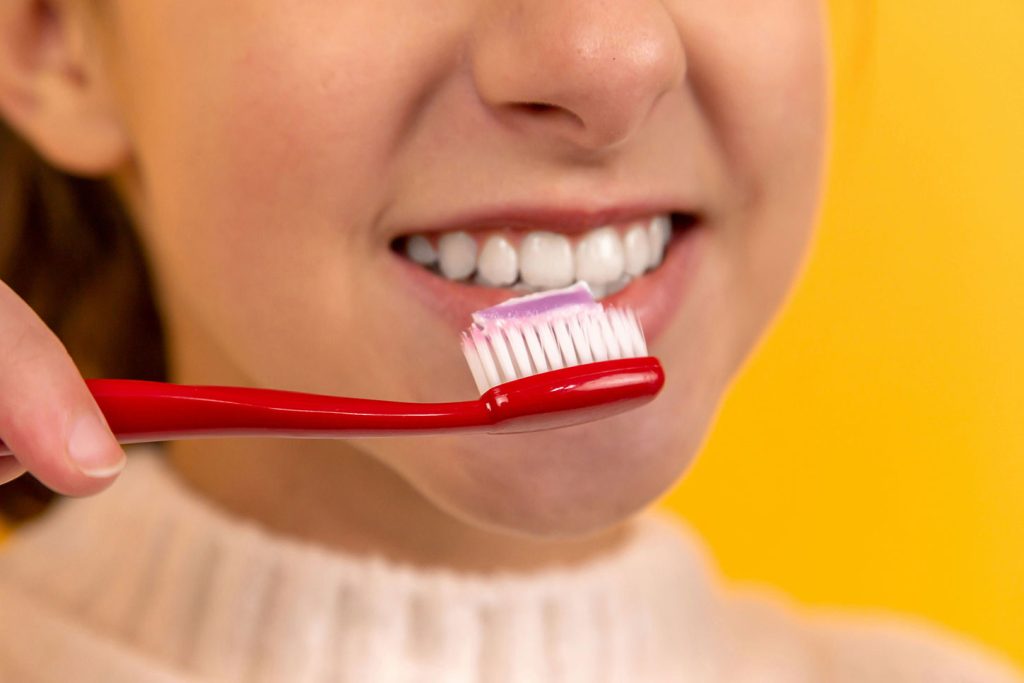
The most consistent and important source of fluoride for most people is the toothpaste they use twice a day. Fluoride toothpaste is one of the most well-studied products in dental care, and the evidence behind it is genuinely strong. Brushing with it twice a day keeps a low level of fluoride in contact with your teeth regularly, which supports remineralization on an ongoing basis.
When patients ask us what the single most impactful thing they can do for their teeth at home is, brushing with a fluoride toothpaste twice a day is always part of that answer. It matters more than most of the specialty products people spend money on.
One note for parents: the guidelines for young children are a little different. For children under three, a tiny smear of fluoride toothpaste is recommended. For children three to six, a pea-sized amount. These guidelines exist because young children often swallow toothpaste rather than spit it out, and the amounts are calibrated accordingly. Your child’s dentist can walk you through what’s appropriate at each stage.
Professional Fluoride Treatments
At the end of a cleaning, we often apply a professional fluoride treatment. This is a higher concentration than what’s in your toothpaste, applied directly to the teeth for a short time, which gives the enamel a more concentrated boost.
We don’t recommend this for every patient at every visit. It’s something we tailor based on your individual situation. Patients who tend to develop cavities regularly, those who have areas of enamel that look like they could use some reinforcement, patients with dry mouth, people undergoing certain medical treatments, and older patients whose gum recession has left root surfaces exposed are among those who benefit most. Root surfaces don’t have the same enamel layer that protects the crown of the tooth, which makes them more vulnerable to decay and more responsive to fluoride.
For some patients, we also recommend prescription-strength fluoride toothpaste for home use. If that’s come up in your care, it means we’ve identified something in your particular situation that makes it a worthwhile addition to your routine.
What About Sensitivity?
Fluoride is also useful for patients dealing with tooth sensitivity. Sensitivity happens when the inner layer of the tooth, the dentin, becomes exposed, often through enamel erosion or gum recession. Fluoride helps by reinforcing the tooth surface and, over time, can reduce the sharpness of that sensitivity. It won’t resolve the underlying cause on its own, but it’s a meaningful part of managing it.
A Simple Thing Worth Taking Seriously
Fluoride doesn’t require much from you. Using the right toothpaste, not rinsing immediately after brushing so the fluoride has a chance to stay on your teeth a bit longer, and accepting the treatment at the end of your cleaning when we recommend it, those are the main things.
It’s one of those areas where the simplest habits make a real difference over time. If you have questions about fluoride treatments or whether a prescription product might make sense for your situation, bring it up at your next visit. We’re always happy to talk through what makes sense for you specifically.