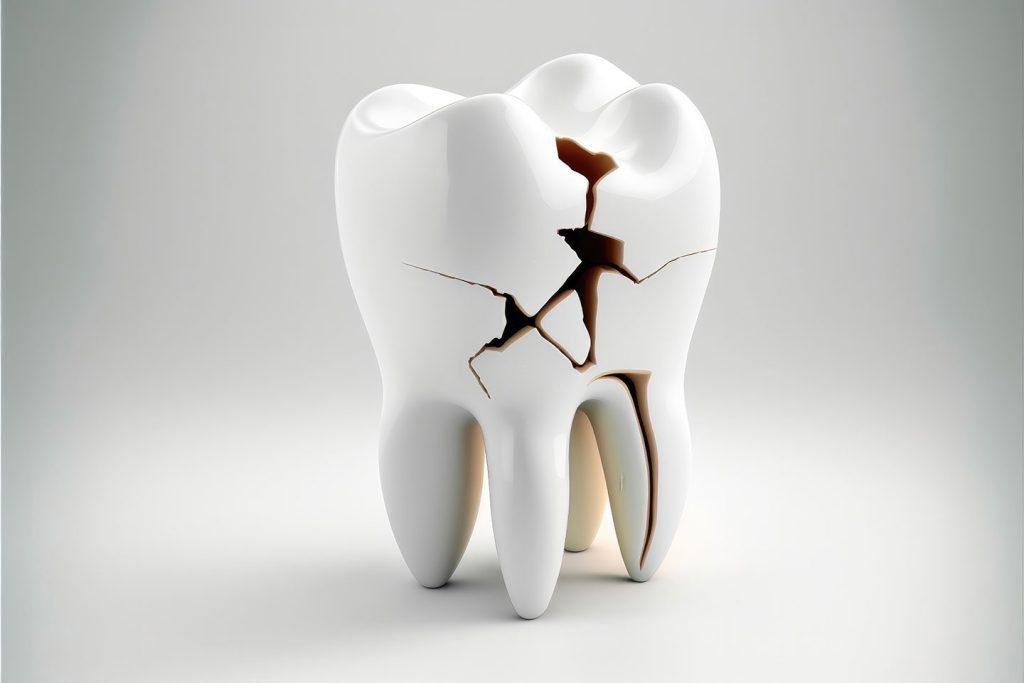
Cracked Teeth Are More Common Than You’d Think
Most people picture a cracked tooth as something obvious. You bite down on something too hard, something breaks, and you know it immediately. Sometimes that is exactly what happens. But a lot of the time, a cracked tooth is something far quieter, something that doesn’t announce itself clearly and can go unaddressed for months or even years while the problem gradually gets worse.
Cracked teeth are one of the leading causes of tooth loss in adults, and they’re becoming more common. Understanding what causes them, what to look for, and why it’s worth acting on them early makes a real difference in what treatment ends up looking like.
Why Cracks Happen
There’s no single cause, and more often than not, there are several factors working together. Teeth that have large fillings are more vulnerable because the filling material doesn’t flex the way natural tooth structure does, which puts more stress on the surrounding tooth over time. Teeth grinding and clenching, which many people do during sleep without realizing it, generates forces far beyond what normal chewing produces, and that sustained pressure takes a toll on enamel over months and years.
Habits matter too. Chewing ice is one of the most common contributors to cracked teeth that we see. It seems harmless because ice is just water, but the hardness combined with the temperature puts real stress on enamel. Biting fingernails, chewing on pens, and opening packages with your teeth all fall into the same category. These things feel minor in the moment, but repeated over time, they add up.
Age is also a factor. Teeth that have been through decades of chewing, grinding, temperature changes, and dental work are simply more susceptible than younger teeth. That doesn’t mean cracked teeth are inevitable, but it does mean they deserve more attention as we get older.
The Problem With Cracks: They Don’t Stay Put
A crack in a tooth is not a stable situation. Unlike bone, which can heal, tooth structure doesn’t repair itself once it’s been compromised. A crack that exists today will, under ongoing pressure, tend to extend further over time. How quickly that happens depends on the size and location of the crack, the forces being applied to it, and whether anything is done to protect the tooth.
This is why the timing of treatment matters so much. A crack caught early, before it has reached the inner layer of the tooth, can often be managed with a crown that holds the tooth together and prevents the crack from spreading further. Once a crack extends into the pulp, which is the living tissue at the center of the tooth, the situation becomes more involved and may require additional treatment to save the tooth. And if a crack runs all the way through the root, the tooth may not be salvageable at all.
We’re not sharing that to alarm anyone. We share it because the difference between a straightforward fix and a complicated one often comes down to how early we catch it, and that’s something patients have real influence over.
What You Might Notice
The tricky thing about cracked teeth is that the symptoms can be easy to dismiss or explain away. The most common one is pain when biting down that releases as soon as you stop. It often only happens in a particular spot or with a specific kind of food, which makes it easy to just avoid that side and move on. Sensitivity to hot or cold that lingers a bit longer than it seems like it should is another sign. Some patients describe a vague aching in a general area of the mouth without being able to pinpoint exactly which tooth is the problem.
Sometimes there are no symptoms at all, and a crack is only visible during an exam or on an X-ray. That’s part of why regular visits matter even when nothing feels wrong. We’re looking for things you wouldn’t necessarily notice on your own.
If any of that sounds familiar, it’s worth mentioning at your next visit even if the discomfort seems minor. The earlier we find it, the more options we have.
Not All Cracks Are the Same
It’s worth knowing that cracks exist on a spectrum. Craze lines are tiny, shallow cracks in the outer enamel that are extremely common and typically don’t require any treatment. They’re more of a cosmetic consideration than a structural one. On the other end of the spectrum are vertical root fractures, which run from the root upward and are the most serious type. Most cracked teeth fall somewhere in between, and the appropriate response depends entirely on where the crack is, how deep it goes, and how the tooth is responding.
That’s why a self-diagnosis isn’t really possible here. If you’re noticing symptoms, the right move is to come in and let us take a look rather than waiting to see whether it gets better or worse on its own.
What Helps Prevent Them
If you know you grind your teeth, a custom nightguard is one of the most effective things you can do to protect your enamel from the kind of sustained pressure that contributes to cracking. It won’t stop you from grinding, but it distributes the force more evenly and takes the brunt of it so your teeth don’t have to.
Avoiding habits like chewing ice, biting your nails, or using your teeth as tools helps too. And staying current with your regular exams gives us the opportunity to catch things before they become complicated.
We know nobody wants to hear that they have a cracked tooth. But the good news is that when they’re caught early, the fix is usually straightforward and the tooth can be protected for a long time. If something feels off, don’t wait. Come in and let us take a look. That’s exactly what we’re here for.